
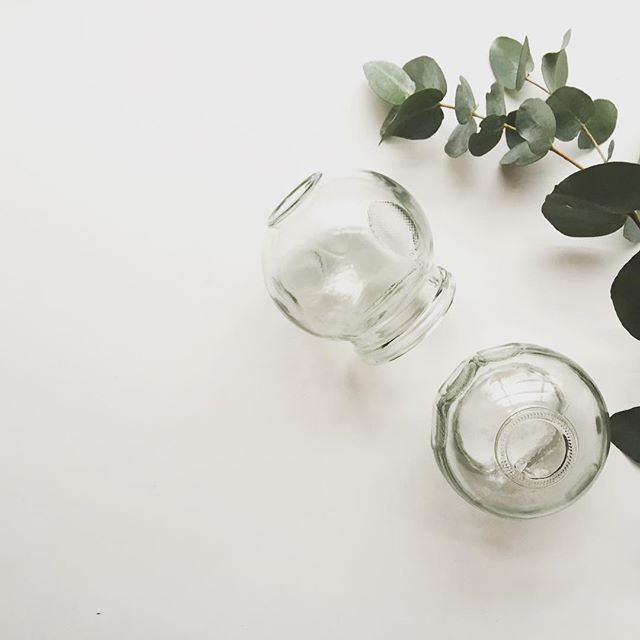
I’ve been talking about cupping a lot recently, mainly because I’ve been using my beautiful glass cups way more than I did my plastic ones, but also because I’ve been surprised that many people a.) didn’t know I could cup and b.) know very little about this lovely treatment.
Cupping has been used in medicine for thousands of years.
The Ebers Papyrus, written c. 1550 BC and one of the oldest medical textbooks in the Western world, describes the Egyptians’ use of cupping, while mentioning similar practices employed by Saharan people. In ancient Greece, Hippocrates used cupping for internal disease and structural problems and the Prophet Muhammed highly recommended cupping for many different conditions. Sadly, there is a lack of evidence supporting the benefits of this treatment but I believe that like massage, every individual responds subjectively to treatment and also relies on visiting a properly trained practitioner.
Cupping became famous as a treatment in itself when it was used at the Rio Olympics this year when, most notably, Michael Phelps was seen sporting the treatment’s trademark circular bruising on his back. It’s not only Olympic athletes who have used cupping, Jennifer Anniston, Victoria Beckham, Justin Beiber, Andy Murray and Lena Dunham have all cited cupping as a way of feeling good and being ‘da cure’!
Think of cupping as the opposite to massage; instead of applying direct pressure, the skin, muscles and fascia are lifted into little cups by creating a vacuum. The vacuum is created with air or heat (with a flame). Wet cupping (with water and where blood is drawn into the cups) is also a technique used in Chinese Medicine but I prefer to use the air/flame method.
It’s difficult to describe the sensation if you’re new to the therapy, but one way is to imagine the feeling you get on your arm if you were to pop the hoover on it, but (obviously) not that intense! Prior to placing the cups on the skin, I warm up the muscles and skin with massage and oil, then pop the cups on the body. After a short while (and checking the comfort level with the patient) I move them gently over the areas needing treatment.
Most commonly I use cupping on the back but its also fab if you have tight hamstrings, calves or even upper arm/neck and shoulder pain. They can also be used on the face, chest and on the abdomen.
I have acupuncture and cupping regularly with my wonderful colleague Eleanor Day and I can honestly say that cupping is by far my favourite element of treatment. Please get in touch if you’d like to know more about how cupping can help you and to book a treatment.
Comments